Canadian and American officials say autos were a sticking point in failed negotiations
U.S. President Donald Trump’s trade ambassador’s recent comments about Canada’s auto industry suggest the level at which it’s integrated throughout North America could remain a major sticking point if talks do resume.
Trump and U.S. Commerce Secretary Howard Lutnick have repeatedly said that the administration wants Canadian auto manufacturing jobs to move south of the border.
In a Canadian exclusive interview with CBC News, U.S. Trade Representative Jamieson Greer was asked about the future of the U.S. and Canada’s integrated auto sector.
“We have a big gap in our manufacturing employment here, and autos is a big part of that,” Greer told CBC News chief political correspondent Rosemary Barton on Wednesday.
“I don’t think this is any secret — we believe that the process of globalization for the United States, of integrating with other economies — even our close neighbours with whom, you know, we trade a lot — we think that has had some negative effects, especially in places like Michigan and Ohio and Pennsylvania and Wisconsin,” he said.
When asked if the goal of the Trump administration is to remove auto manufacturing from Canada entirely, Greer said the aim is to “re-industrialize” in general.
“I understand why the Canadians, you know, want to have as much as they can get and try to expand concessions from the U.S.,” he said. “But we are focused on doing what’s good for America and accommodating Canada to the extent we can.”
Greer was the American lead on trade talks that fell apart last week. Both American and Canadian officials have said that U.S. tariffs on finished vehicles and Canadian auto parts were outstanding issues in those negotiations.
Canadian negotiators sought to have those tariffs reduced from the 25 per cent rate, but argued that the U.S. at the last minute sought to exclude heavy- and medium-sized trucks from that relief. The Americans, including Greer, dispute that the exclusion was a last-minute ask on their part.
Heavy and medium trucks would include some models of Ford’s F-Series pickups and General Motors’ Silverado which are both made at Ontario plants that employ roughly 20,000 workers.
Greer said medium- and heavy-duty truck duties were “separate” from the auto tariffs the Trump administration had offered lower.
Flavio Volpe, president of the Automotive Parts Manufactures’ Association, said Greer’s recent comments shouldn’t come as a surprise.
“The president has said it, the secretary of commerce has said it … they want cars made in the U.S. and not in Canada and so you don’t have to tell me that again,” Volpe told CBC News.
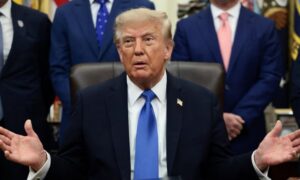
Since the first few weeks of his second term, Trump has said “we don’t need [Canada] to make our cars.” The president repeated that claim in the Oval Office on Thursday after signing an executive order to rename Lake Ontario to Lake America.
“We want to make the cars here. They can make their own cars if they want and they can continue to make their cars for Canada. But we don’t want them to make cars for the United States of America,” he said.
Last fall, Lutnick told an audience in Toronto that he wanted to use tariffs to drain auto assembly from Canada. Sources told CBC News just prior to last week’s deal falling apart that Lutnick was dissatisfied with what was on the table, specifically around auto tariffs.
Auto rep ‘encouraged’ by Greer’s remarks
Brian Kingston, president of the Canadian Vehicle Manufacturers’ Association, said he’s “encouraged” by Greer’s comments on the goal of re-industrializing in the U.S. He said that industrializing the American automotive industry will by necessity include Canada.
“It’s not unexpected that we’re going to see heightened rhetoric following the breakdown of negotiations,” Kingston told CBC News.
“[Greer] did not say ‘Canada can’t have an auto industry.’ And in fact, Canada should be doing everything in its power to protect our industrial base and strengthen it. So how do we do that? We’re going to do that by strengthening our auto industries together, which are tightly integrated.”
Trump threatened to double tariffs on Canadian-made vehicles and non-CUSMA-compliant auto parts in the new year after the talks fell apart last week.
Kingston said continued retaliation will threaten the entirety of the North American auto industry.
“If we can’t find an off ramp in lower tariff rates, it makes the industry across North America less competitive and therefore it will reduce their ability to compete with manufacturers in other parts of the world,” he said.
Despite the breakdown in negotiations, Kingston said he thinks a deal is still within reach.
“Cooler heads will prevail. But we do need to stop the cycle of retaliation and start talking again,” he said.
Volpe said he hopes the Trump administration realizes it doesn’t make sense to separate the Canadian and American auto sectors.
“Countries don’t make cars. Industries in those countries make cars,” he said.
“When you have the ambassador come on and say Canada is the source of the decline of U.S. auto, that’s like saying your right foot is the source of the pain in your left foot.”
Source : cbc.ca