Proponents of bill say it will address enforcement gap of First Nations laws and bylaws
Witnesses weighed in Monday in Ottawa on proposed changes to legislation that would officially recognize RCMP officers’ duty to enforce First Nations laws and bylaws.
Bill S-223 seeks to amend sections of the Royal Canadian Mounted Police Act, and is currently under consideration by the Senate Committee on National Security, Defence and Veterans Affairs.
Proponents of the bill say it will address uncertainty for RCMP around enforcing individual First Nations laws and bylaws across the country by clarifying its policing mandate to include them.
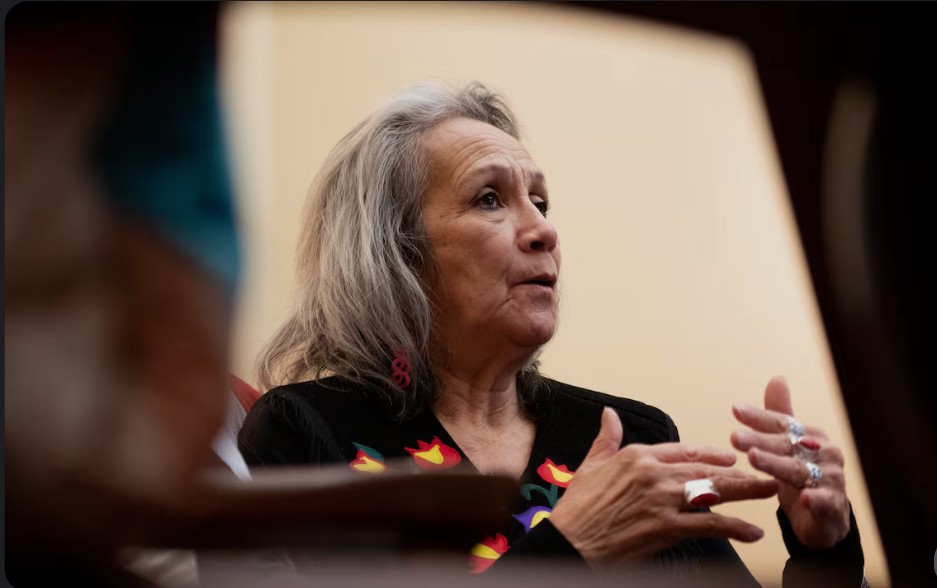
Sen. Mary Jane McCallum, who is Cree, put forward the bill in June 2025.
“When I go home to my reserve, I see the difference in the structure and delivery of security and safety services,” she told the committee as a witness.
“What we are here [to do] is to fight for the same rights that other Canadians have and that we don’t.”
First Nations laws and bylaws are defined in the bill as a bylaw made under the Indian Act, a law under the Framework Agreement on First Nation Land Management Act, or a law by a First Nation under a self-government agreement.
Lack of enforcement
Michael Anderson, policing and public safety advisor at Manitoba Keewatinowi Okimakanak Inc., told the committee RCMP policing agreements after 2014 de-emphasized First Nations laws and bylaws in comparison to earlier agreements.
“Essentially the RCMP are suggesting that bylaw enforcement is secondary to the rest of their duties,” said Anderson.
But Sen. Judy White, a member of the Flat Bay Band in Newfoundland, said she had questions about how First Nations that are already resistant to having police within their communities would feel about the legislation if it passed.
“A number of provinces don’t want the RCMP in their communities for the most part, let alone to now give them more broad scope to go in and enforce their own bylaws,” said White.
“How would I be able to speak to those communities and say this is what we’re doing?”
Andrew Beynon, director of land code governance at First Nation Lands Advisory Board, replied the bill simply recognizes and clarifies an authority that already exists in the law.
“The RCMP has in the text the authority to enforce laws of Canada as a police service,” said Beynon.
“What Parliament would be doing here is to make it crystal clear that amongst those laws are First Nation laws.”
McCallum said not enforcing First Nations laws, such as trespass bylaws and abstinence laws, have impacted the health of communities and the strength of government.
“When the RCMP refuse to enact bylaws on the reserve… it essentially undermines the leadership authority, and it undermines self determination,” said McCallum.
‘No definitive reason’ laws not enforced
RCMP Chief Supt. Simon Pillay, director of national criminal operations, told the committee while he agrees “prior to 2014 there was more enforcement and more prosecution” of offences to First Nations laws and bylaws, there was no formal direction not to following that time.
“This was not an official policy position of the RCMP… there’s no definitive reason,” said Pillay.
“All we can essentially come to understand is that there was confusion around prosecutorial responsibilities, statutory authorities, and this is what we’re now trying to tackle.”
Robert Louie, chief of Westbank First Nation in B.C. and chair of the First Nation Lands Advisory Board, said good governance dictates laws made by First Nations must be enforced.
“How do you think that makes the community members feel? They look to the chief and council and say, ‘I thought we had self government,'” Louie said.
“How can you be a recognized government without having your laws enforced?”
Source : cbc.ca