Trump later calls notion ‘laughable,’ threatens to punish EU if he deems it a ‘hostile act’
A long-serving Republican senator from a border state is warning Prime Minister Mark Carney against strengthening Canada’s economic and political ties to the European Union.
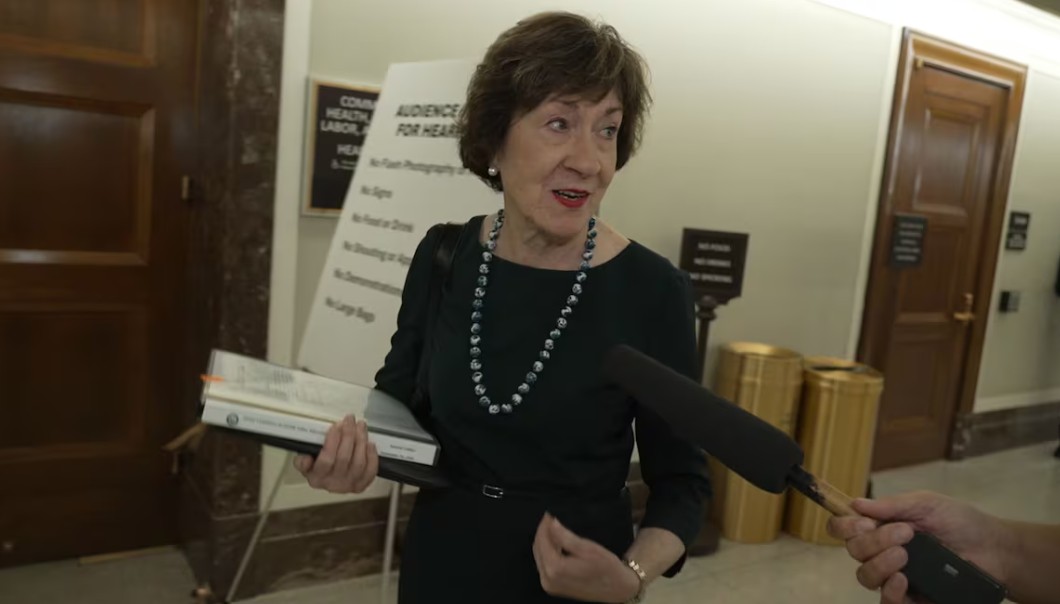
Sen. Susan Collins of Maine — facing a re-election battle in November’s midterms in a state highly dependent on cross-border trade — says it’s unfortunate that Canada is turning toward the EU in response to U.S. President Donald Trump’s tariffs.
“That doesn’t help rebuild the good relationship that we once had and that I want us to have again,” Collins told CBC News correspondent Katie Simpson at the U.S. Capitol on Wednesday.
In a speech earlier Wednesday in Strasbourg, France, with Carney present, European Commission President Ursula von der Leyen said Europe wants to open the door for Canada to become an “associate member” of the EU.
(It’s not clear what that would mean, as “associate member” is not currently a legal designation in the EU. Although Canada’s ambassador to the EU says the two sides are “a ways away” from formalizing anything, Carney has said he wants a “unique alliance” with Europe.)
In response to a question Wednesday evening about the prospect, Trump called it “laughable” and threatened to punish Europe.
“If they do that, if I think it’s at all a hostile act, I will put very serious tariffs or stop trading with Europe on many things,” he said. “If it’s a good intention, that’s fine.”
Collins says she believes Canada deepening its ties with Europe could make it harder for the Carney government to reach a deal with the Trump administration to end the escalating trade war.
“I believe that both Canada and the United States should return to the bargaining table. I do not support this tariff war,” Collins said.
Collins has long tried to distance herself from Trump’s tariff policies, in part because Canada accounts for roughly two-thirds of Maine’s imports and about 40 per cent of its exports.
She claimed credit last week when the Trump administration announced it was exempting cement and road salt — two products Maine imports from Canada in significant quantities — from its list of Canadian goods facing new tariffs of 50 per cent.
‘Not in the interest of our country’
Collins’s comments come amid growing signs of unease among some Republicans in the U.S. Congress over Trump’s trade tactics toward Canada, particularly as the Nov. 3 midterm elections grow nearer.
The Republicans hold narrow majorities in both the U.S. House of Representatives and the Senate and stand to lose control of Congress if the Democrats can flip a handful of districts or states.
Sen. Bill Cassidy, a Republican from Louisiana who has occasionally broken with Trump on policies, told CBC News he’s opposed to the trade war.
“I think it is wrong to have a trade war with Canada. It is not in the interest of our country to have a trade war with Canada,” Cassidy said.
Meanwhile, Democratic Sen. Chris Coons of Delaware says it will be “a tall order” to halt Trump’s trade war on Canada even if the Democrats win the midterms.
“We won’t be able to reverse his direction immediately, but at least with a new majority in Congress, should we be successful in the November elections, Canadians will begin to recognize their neighbours again,” Coons told CBC News.
Coons says he has spoken with “personal friends” in Carney’s cabinet about action that he and other members of Congress could take to win back allies in Canada.
He says he’s working on “a bipartisan trip to Canada by American lawmakers to say, we hear you, we get it, we’re acting.”
Coons declined to say who in the Canadian cabinet he was speaking with, and his office had no further details about which lawmakers are interested in the trip or when it’s likely to happen.
His initiative is part of a movement among Democrats to try to seize on the concerns of many Americans that Trump’s tariffs are driving up the cost of living, which polls suggest is a top issue in the midterms.
This week, Senate Democrats formally introduced a bill that seeks to repeal and refund all tariffs the Trump administration has levied under Section 338 of the Tariff Act, including the 50 per cent duties imposed on Canadian products in August.
The bill, first tabled in the House by congressman Brad Schneider of Illinois, is called the BAD DEAL Act, an acronym for Banning Antiquated Duties and Delivering Equitable American Levies.
What’s not clear is whether any such Democrat bill has any chance of becoming law with Trump in the White House for another two-plus years.
Even if the Democrats win control of both the House and the Senate, the U.S. president holds veto power over legislation unless it’s approved by a two-thirds majority of both houses.
Source : cbc.ca