Canada-U.S. trade minister says strategy unchanged after Republican midterm losses
A senior Democrat says his party will work to end U.S. President Donald Trump’s tariffs on allies, including Canada, when it takes control of Congress next year.
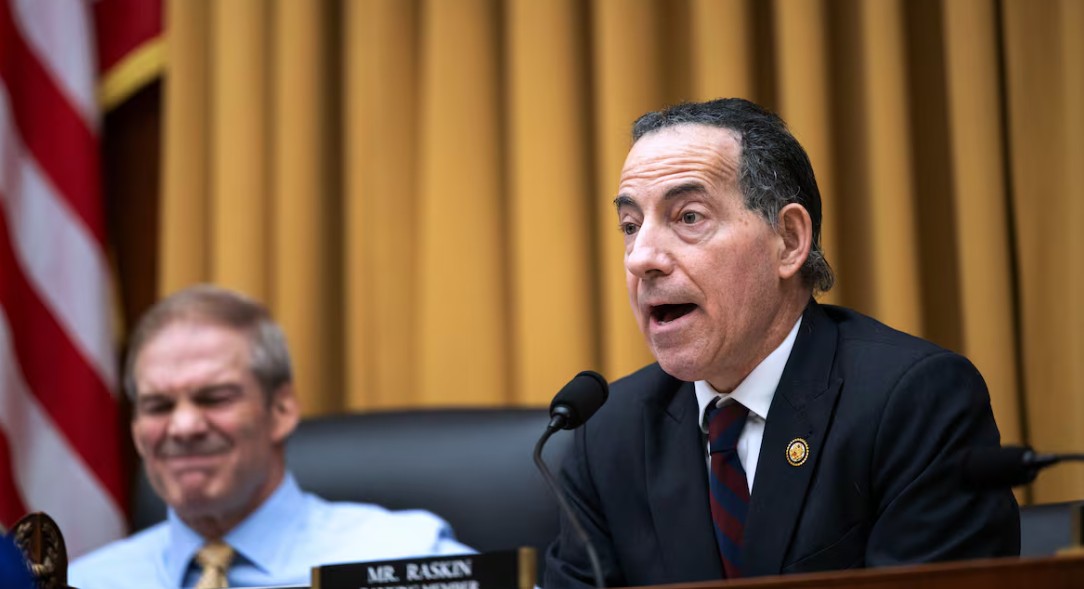
“We want to have free and fair trade with Canada like the rest of the world. So that’s going to be very much on our agenda,” Maryland Rep. Jamie Raskin, the ranking Democrat on the House judiciary committee, told CBC News Wednesday on Capitol Hill.
His comments came hours after American voters handed a seismic win to Democrats in Tuesday night’s midterm elections, giving them control of both the House of Representatives and the Senate.
It’s raising questions north of the border about what this could mean for lifting tariffs on Canadian industries.
“That’s one of the reasons we won Congress back — because we’re going to put an end to these tariffs,” Raskin said.
“Congress controls taxes and tariffs under the Constitution. Congress regulates commerce internationally and domestically. And so we’re gonna do everything in our power to make it very clear that we have not imposed 50 per cent tariffs on our democratic allies and friends in Canada.”
Raskin was re-elected to a sixth term on Tuesday night and is in line to chair the powerful judiciary committee.
He said he hopes to see movement on the Canada trade file “within the first 100 days” of Democrats taking power in the new year.
“We want to tell our democratic allies around the world, especially our best friends like Canada, that the forces of democracy and freedom have won in this Congress, and we are going to [be] moving very quickly to restore normal ties,” he said.
LeBlanc says strategy unchanged
Canada’s point man on the Canada-U.S. trade file said earlier on Wednesday that the federal government’s strategy isn’t changing in the short term.
While the results are widely seen as a strong repudiation of Trump and his economic policies, Canada-U.S. Trade Minister Dominic LeBlanc wouldn’t weigh in ahead of a caucus meeting on Wednesday morning in Ottawa.
“It’s not particularly constructive for Canadians to interpret results in a foreign country’s election,” he said. “Our job is to focus on what we can control, and that’s to work with the people that Americans have elected.”
LeBlanc noted the trade talks are conducted with Trump and his cabinet.
“They remain in office today. And those are the people with whom we’ll be having those conversations,” he said.
Canada has been seeking a trade deal with the U.S. in hopes of lowering steep tariffs on Canadian goods, including targeted sectors like autos, steel, aluminum and softwood.
One of the big questions for the Canadian side is how the infamously volatile U.S. president reacts to the midterm shellacking and whether it gives Prime Minister Mark Carney’s government more leverage.
Trump was already signalling some movement on the trade file, telling Fox News on Tuesday morning he was close to a deal.
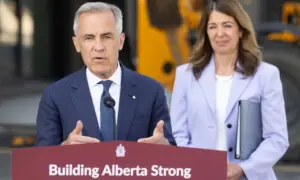
Carney didn’t go quite as far but told reporters that afternoon that the White House has shifted its stance on some of what he called Canada’s “red lines,” including language requirements and Canada’s ability to strike trade deals with other countries.
“They’re asking less and they’re offering more,” the prime minister said, adding the two leaders will meet in China later this month.
He said there is still work to be done before a deal is inked. Autos are expected to be a key sticking point, as they were in August before talks collapsed — triggering new tariffs on both sides.
Trump still has his veto powers
A blue Congress doesn’t necessarily mean it’s clear sailing for Canada. The new crop of representatives and senators won’t be sworn in until January, and even after that Trump will still be able to lean on his executive authority.
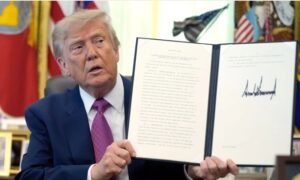
After the results came Trump posted an image of a red MAGA-style hat with the word “VETO,” although he also told Politico “I don’t want to be just sitting there for two years vetoing everything.”
Vermont Sen. Peter Welch is urging his party to concentrate on “bread and butter” affordability issues, including passing legislation ending tariffs.
Welch, along with fellow Democrat New York Sen. Kirsten Gillibrand, introduced a bill in September that would repeal the Trump administration’s 50 per cent tariffs and import bans on Canadian goods
“We can’t force the president to sign the legislation we put on his desk, but we can pass it in good faith. And then if he signs it, great. America wins,” Welch told CBC’s Power & Politics.
“If he vetoes it, then America knows. So we’ve got to be purposeful, do things that really matter for everybody, not just Democrats.”
David Cohen, former U.S. Ambassador to Canada, cautioned that despite some of the remarks coming out of the blue camp, it remains unclear what a landslide win will actually mean for trade.
“You need the White House and the administration — the executive branch of government — to be able to make meaningful change in trade policy,” he told host David Cochrane.
“I just worry that people will get their hopes up that there is a way, for example, for Canada to get an overall deal with the United States that do not have some level of tariffs in them. That just may not be possible.”
LeBlanc said the potential actions of the next U.S. Congress make for an “interesting discussion,” but that’s “not going to change the work that we have to do in the next two weeks.“
“The American Congress will act in the interests of the American Congress. Our work will be focused on what we can do here at home,” he said.
Conservative Leader Pierre Poilievre said it’s on Carney and his government to leverage the results to land a tariff-free trade deal with the U.S. administration.
“Americans hate these tariffs,” he said. “Let’s leverage that goodwill to pressure the administration and Congress to remove all the tariffs, lower the cost of living for Americans but also boost jobs and business for long-struggling Canadians.”
NDP Leader Avi Lewis pointed out not all Democrats are against tariffs.
“We do see certain elements within the Democratic Party that have supported the tariffs or have been silent on that,” he said.
“If the prime minister were to channel the progressive Carney that we saw in the last election campaign, it would be a great time to build relationships with those Democrats and start laying the seeds for a lasting trade deal that really reduces those tariffs.”
Source : cbc.ca